
How Text RPG Economies Function: A Developer’s Guide
Text RPG economies are structured systems where virtual currency, resource flows, and trade mechanics shape every player decision and narrative outcome. Understanding how text RPG economies function separates games that feel alive from games that feel like spreadsheets with flavor text. The difference lies in three core components: a currency model, a resource management layer, and a pricing mechanism that responds to player behavior. Designers who get all three right build worlds players return to. Designers who skip one create games where players either go broke or become unstoppably wealthy within a few sessions.
How text RPG economies function: the three core models
Three main RPG economic models exist in practice: bounded economies, unbounded economies, and dynamic simulations. Each solves the same problem differently.
Bounded economies use a Wealth-by-Level budget. Pathfinder is the clearest example. The system assigns expected gold totals per character level and calibrates item costs against those totals. Players always have roughly the right amount of money to buy what they need. The tradeoff is predictability. Players learn the budget quickly and start treating the economy like a math problem rather than a living system.
Unbounded economies rely on rarity tiers to control scarcity instead of hard caps. D&D 5E works this way. Common items are cheap and plentiful. Rare and legendary items are expensive or simply unavailable for purchase. The economy never tells you how much gold a character should have. It controls desire through availability. The risk here is runaway wealth. Players who farm efficiently can accumulate gold with nothing meaningful to spend it on.
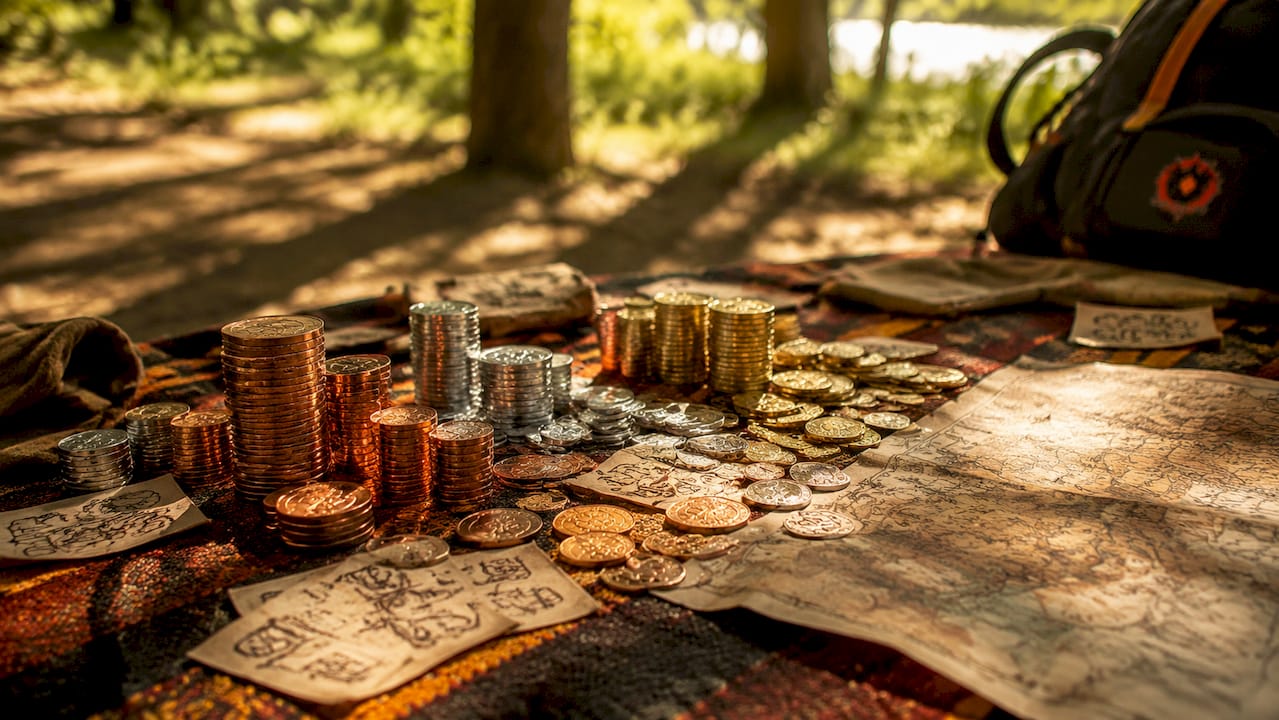
Dynamic simulation systems track supply and demand in real time. Vendor inventory shifts. Prices rise when goods are scarce and fall when players flood the market. This model creates the most realistic text RPG economic systems but demands the most design work to implement without frustrating players.
| Model | Example | Scarcity Method | Main Risk |
|---|---|---|---|
| Bounded (Wealth-by-Level) | Pathfinder | Hard gold budget per level | Feels mechanical |
| Unbounded (rarity tiers) | D&D 5E | Item availability limits | Runaway wealth |
| Dynamic simulation | Custom systems | Supply and demand tracking | Design complexity |
Pro Tip: Start with a bounded model for your first text RPG project. It gives you a controlled baseline before you layer in dynamic pricing.
How does text-based RPG currency actually work?
Coin values in fantasy RPGs span from copper for small trades up to gold and special coins for major transactions, with consistency and scaling prioritized over strict historical accuracy. The multi-tier system exists because it mirrors real economic psychology. Players feel the weight of a purchase differently when they spend 200 copper versus 2 gold.
A well-designed coin system requires a ratio of predominantly low-value to high-value coins. Medium-sized games with 20–30 players should have roughly 300 coins in circulation, with large games requiring 1,000 or more, emphasizing low-value denominations for usability. That ratio matters because it keeps small transactions meaningful without making players carry absurd amounts of currency.
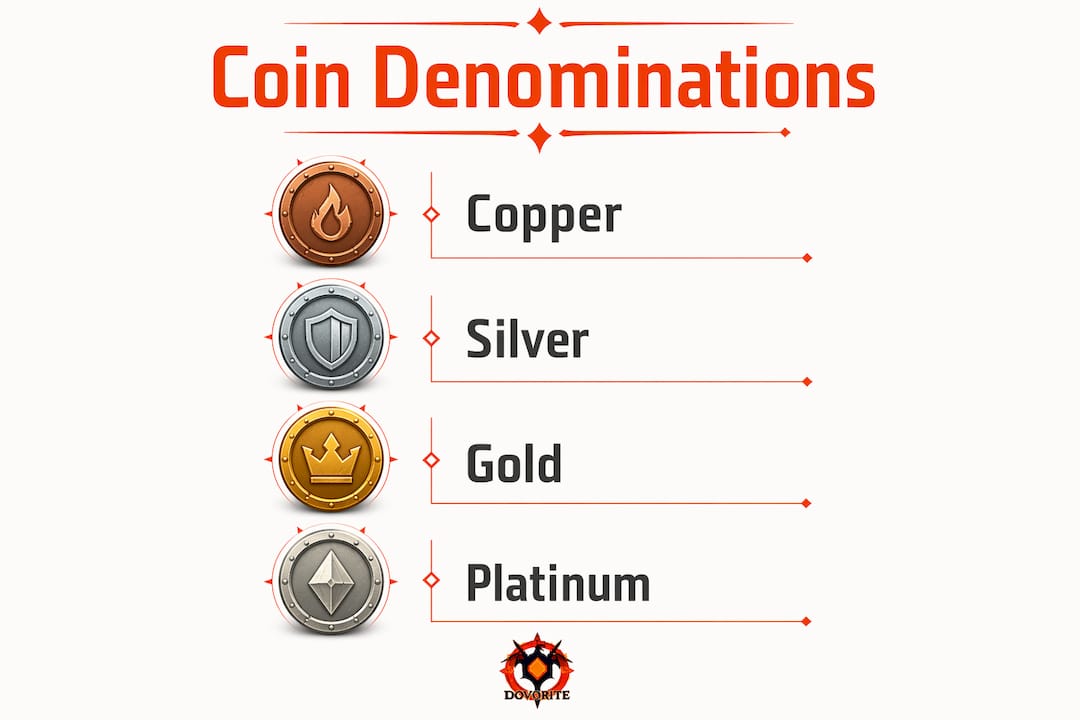
Here is a standard denomination table that works for most text RPG settings:
| Coin | Relative Value | Typical Use |
|---|---|---|
| Copper | 1 | Bread, rope, candles |
| Silver | 10 copper | Meals, basic tools |
| Gold | 100 copper | Weapons, armor, lodging |
| Platinum | 1,000 copper | Major trades, magical items |
The design trap most developers fall into is treating coin types as purely cosmetic. Each denomination should correspond to a real tier of goods in your world. If nothing costs copper, copper becomes meaningless. If everything costs gold, players stop caring about smaller coins entirely. Both outcomes flatten the economy.
Pro Tip: Map every vendor’s inventory to at least two coin tiers. A blacksmith should sell both silver-priced tools and gold-priced weapons. That range keeps all denominations in active use.
Good text RPG writing reinforces currency weight through description. When a character hesitates before spending their last silver on a meal, the economy becomes part of the story.
How do survival resources integrate into RPG resource management?
Resource management in text RPGs goes beyond gold. Survival needs create a second economic layer that forces players to make tradeoffs between wealth and sustainability. Adult characters need one unit of provender daily for strenuous activity, and crafting rations from provender reduces bulk by up to 75%, increasing shelf life and portability. That single mechanic generates dozens of economic decisions per session.
Resource crafting and conversion let players optimize inventory and economic value, directly impacting decisions about supply management. A player who converts raw provender into compact rations carries more food for the same weight. That player can travel farther, take longer quests, and earn more gold before needing to resupply. The economy rewards preparation.
The resource acquisition chain matters as much as the resources themselves. Players can forage, hunt, craft, or buy. Each method has a different cost in time, skill, and currency. Foraging costs time but no gold. Buying costs gold but no time. Crafting costs both but produces superior results. Giving players all three options creates genuine strategic depth in inventory management.
Here is how resource conversion affects economic value in practice:
- Raw provender is cheap and heavy. It spoils quickly and takes up significant pack space.
- Dried rations cost more to produce but weigh less and last longer. Players trade upfront gold for long-term efficiency.
- Magical provisions are expensive but provide bonuses beyond basic sustenance. They represent a luxury tier that gives wealthy players a meaningful way to spend gold.
- Foraging results are free but inconsistent. Bad foraging rolls mean hungry characters and forced resupply stops.
- Crafted meals from quality ingredients provide temporary stat bonuses, making cooking a genuine economic skill rather than a flavor mechanic.
The spoilage mechanic deserves special attention. When food expires, players lose both the resource and the gold they spent acquiring it. That loss creates urgency. Urgency creates decisions. Decisions create world simulation depth that makes the game world feel real.
What design strategies keep RPG economies balanced and engaging?
Players often break standard RPG economies by becoming infinitely wealthy, causing loss of interest. Dynamic pricing based on vendor inventory can prevent this. Prices shift as vendors adjust to inventory, preventing trade lock and keeping currency meaningful. This is the single most underused tool in text RPG economic design.
The practical fix is straightforward. When players sell large quantities of a single item, that vendor’s buy price drops. When players buy out a vendor’s stock, the remaining items get more expensive. The economy pushes back against exploitation without punishing normal play.
Beyond pricing mechanics, here are the core strategies that keep text RPG economic systems healthy:
- Introduce gold sinks at every level. Repair costs, training fees, property taxes, and guild dues all drain currency without feeling punitive. Players spend money to maintain their position rather than just accumulate.
- Make barter viable. Currency introduced without meaningful purchase options weakens economy design. Barter and trade goods serve better in regions where coin is rare or distrusted. A desert trading post that only accepts water or rare spices creates a memorable economic encounter.
- Use counterfeit mechanics. Fake coins, debased currency, and regional exchange rates add friction that makes the economy feel real. A player who receives payment in foreign coin must find a money changer. That interaction generates roleplay.
- Tie prices to narrative events. A siege drives up food prices. A dragon attack collapses the gem market. War creates demand for weapons and armor. The economy responds to the story.
“Economies should be narrative engines, generating adventure hooks and player engagement beyond simple loot.” — Custom D&D Currencies & Trade Goods Guide
Economies as narrative engines create adventure hooks through trade scenarios, counterfeit investigations, and barter deals. A merchant who pays in suspiciously perfect gold coins is not just a vendor. He is a plot hook. The economy stops being a background system and becomes a storytelling tool.
Pro Tip: Design at least one economy-driven quest per major story arc. A trade dispute, a currency crisis, or a smuggling ring gives players a reason to care about gold beyond buying better gear.
Key Takeaways
Text RPG economies function best when currency, resource management, and dynamic pricing work together as a single interconnected system rather than separate mechanics.
| Point | Details |
|---|---|
| Choose the right economic model | Bounded systems suit new designers; dynamic simulations reward experienced teams willing to invest in complexity. |
| Scale coin distribution carefully | Medium games need roughly 300 coins in circulation, with most in low-value denominations to keep all tiers active. |
| Layer survival resources over currency | Food, crafting, and spoilage mechanics create a second economic layer that generates constant player decisions. |
| Use dynamic pricing to prevent exploitation | Vendor inventory shifts stop players from farming infinite wealth and keep currency meaningful throughout the game. |
| Treat the economy as a narrative tool | Trade disputes, counterfeit investigations, and barter deals turn economic mechanics into story-generating engines. |
Why economy design is the most underrated craft in text RPGs
I have watched more text RPG projects fail from bad economy design than from bad writing. The writing gets attention. The economy gets patched after launch, usually too late.
The mistake I see most often is treating currency as a reward delivery system rather than a world-building tool. Designers drop gold at the end of every encounter and call it an economy. Players collect it, spend it on the next gear tier, and repeat. The economy never creates a decision that matters. It just measures progress.
The games that stick with players are the ones where the economy creates genuine tension. You have 40 gold. The healer’s fee is 30. The sword you need for the next dungeon costs 50. You cannot afford both. That moment is not a combat encounter or a dialogue tree. It is a pure economic decision, and it is just as memorable as any boss fight.
The other lesson I keep relearning is that complexity does not equal depth. A system with 12 coin types and 200 trade goods is not automatically more engaging than a simple three-tier system with meaningful gold sinks. Depth comes from consequences, not from options. Every economic mechanic should create a moment where a player thinks, “I should have planned better.” That feeling is what replay value is actually built on.
Build the economy first. Then write the world around it.
— Corban
Dovorite Chronicles: where economy meets adventure
Dovorite Chronicles puts these economic principles into practice across its playable fantasy adventures. The platform uses dynamic currency systems, multi-tier resource management, and narrative-driven trade mechanics that respond to player choices in real time.

Adventures like Tomb of the Forgotten Guardians and The Dragon Crown Conspiracy place economic decisions at the center of the story. Trade deals shift faction relationships. Resource shortages force hard choices. Currency quirks become plot points. Players who want to experience a text RPG economy that actually functions the way this guide describes can join Dovorite Chronicles and see the mechanics in action.
FAQ
What is a text RPG economy?
A text RPG economy is a structured system of virtual currencies, resource flows, and trade mechanics that governs player purchasing power and survival within a text-based role-playing game. It shapes every decision from buying equipment to managing food supplies.
What are the main economic models in RPGs?
The three main models are bounded economies like Pathfinder’s Wealth-by-Level system, unbounded rarity-tier economies like D&D 5E, and dynamic simulation systems that track supply and demand in real time.
How do coin denominations work in text-based RPG currency?
Most text RPGs use a multi-tier coin system ranging from copper for small purchases to gold or platinum for major transactions. Consistency across tiers matters more than historical accuracy, and each denomination should correspond to a real category of purchasable goods.
How do you prevent players from breaking a text RPG economy?
Dynamic pricing tied to vendor inventory is the most effective fix. When players sell large quantities of one item, that vendor’s buy price drops automatically, preventing infinite wealth accumulation and keeping currency meaningful throughout the game.
Why does resource management matter in designing RPG economies?
Resource management creates a second economic layer beyond currency. Survival needs like food and crafting supplies force players to make tradeoffs between wealth and sustainability, generating decisions that make the game world feel real and consequential.